
Sandro Botticelli: The Annunciation
A Visio Divina Reflection for Advent: Week One | Hope
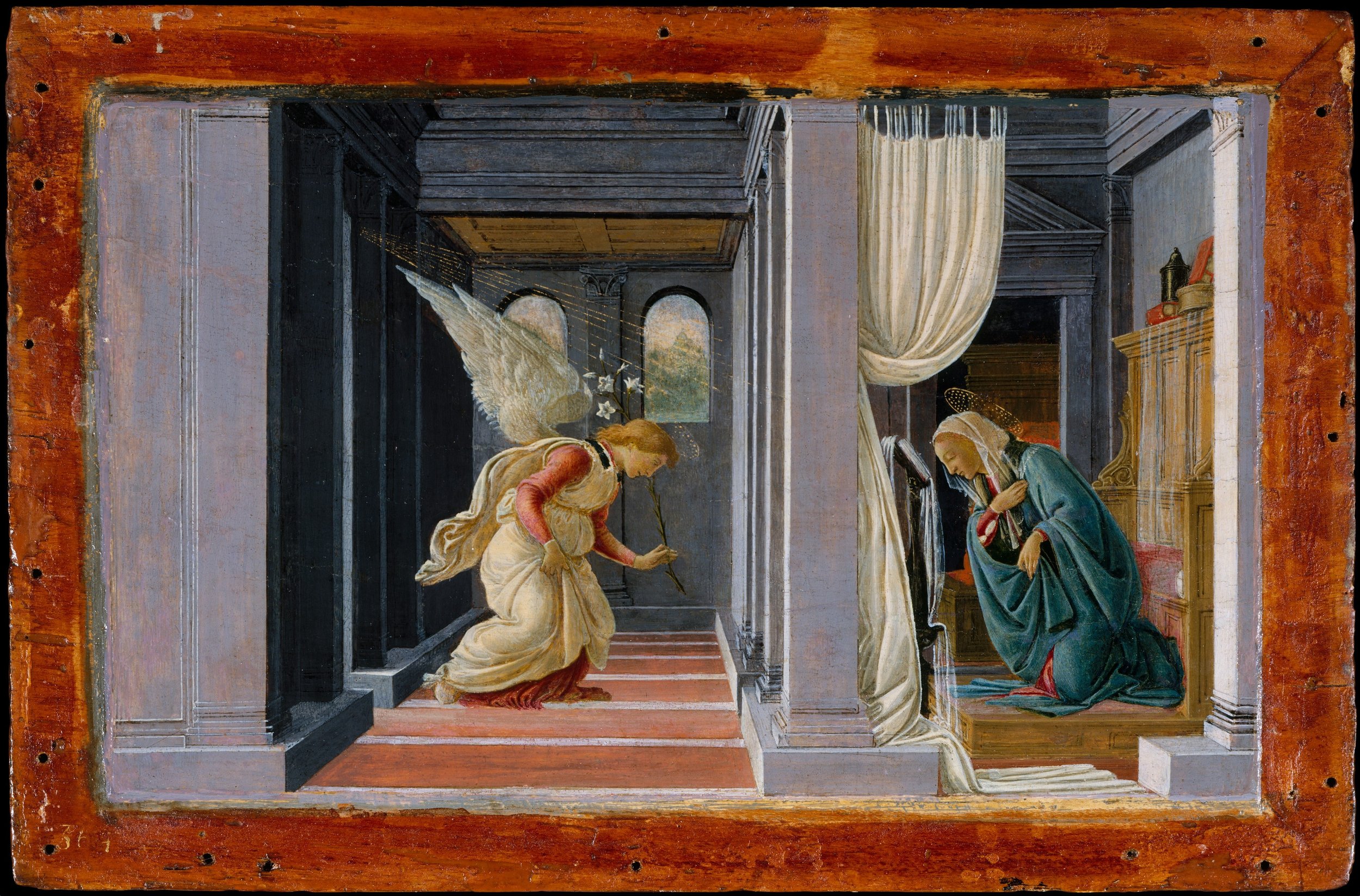
Few moments in Scripture capture the collision of heaven and earth as beautifully as the Annunciation; when the angel Gabriel reveals to Mary that she will bear the Christ. Sandro Botticelli’s rendering of this scene, painted in the late 1480s for the Florentine church of the Benedictine monastery of Cestello, is one of the most poetic interpretations of this moment in art history.
About the Artist
Sandro Botticelli (1445–1510) was one of the central painters of the early Italian Renaissance: deeply influenced by the Medici family, Christian theology, and the flourishing humanist thought of Florence. Known for masterworks like The Birth of Venus and Primavera, Botticelli carried a unique ability to merge spiritual mystery with graceful, lyrical beauty. His figures are often tender, contemplative, and filled with a sense of longing—a quality that makes his sacred works especially resonant today.
About the Painting
The Annunciation was commissioned for a monastic community dedicated to prayer, contemplation, and spiritual formation. Botticelli’s composition is intentionally gentle: Gabriel enters with humility, one knee bent; Mary responds with a mixture of wonder, surrender, and holy hesitation. Light pours across the architectural space as if heaven itself is breaking open, symbolizing the arrival of divine promise into an ordinary human life.
Every detail speaks of expectancy:
The sweeping motion of Gabriel’s cloak suggests the movement of the Spirit.
The way Mary leans back yet opens her hands captures both her humanity and her brave yes.
The architectural perspective pulling toward the horizon hints at hope stretching beyond what is seen.
Botticelli paints the moment before Mary speaks her famous words: “Let it be to me according to Your word.”
This is the threshold of hope: the breath before surrender, the pause before promise takes root.
Advent Hope: The light that finds us
During Week One of Advent, we meditate on Hope; hope that enters our waiting, our longing, and our unfinished places. Botticelli’s Annunciation invites us into that same posture. Not certainty. Not full understanding. But the holy openness that makes room for Christ.
In Visio Divina, we approach the painting slowly:
We notice the light.
We notice Mary’s posture.
We notice the gentle insistence of God’s nearness.
And we ask:
Where is hope arriving quietly in my own life?
What promise might God be whispering into my ordinary days?
Where am I being invited to say yes?
Just as Mary received the promise of God within her, Advent invites us to receive hope not as sentiment, but as something growing, forming, and taking shape inside us.
Botticelli gives us a window into that mystery. A reminder that hope often begins softly.
And that God meets us, just as He met Mary; in the quiet, in the ordinary, with a message that transforms everything.